
The short answer
| Hunting | Floor | Comfortable |
|---|---|---|
| Ducks on water | 12 | 18 to 24 |
| Ducks in a field | 18 to 24 | 30 to 48 |
| Canada geese | 24 | 4 to 6 dozen |
| Snow geese | 3 to 4 dozen | 6 to 10 dozen or more |
| Specklebellies | 12 to 24 | 18 to 36 |
These are starting points. The birds, the water and the pressure will tell you where to go from here.
Ducks
On water, a dozen is about the minimum where I really feel like I have a spread working. If I have the room, I am more comfortable with 18 to 24 ducks. That gives you enough birds to look natural without overdoing it.
In a field, I like a little more. I would call 18 to 24 the floor, and 30 to 48 a really comfortable spread. But you do not need to cover the whole field. I want to make the birds think that is where I want to be, and give them a clean place to finish.
Canada geese, snows and specks
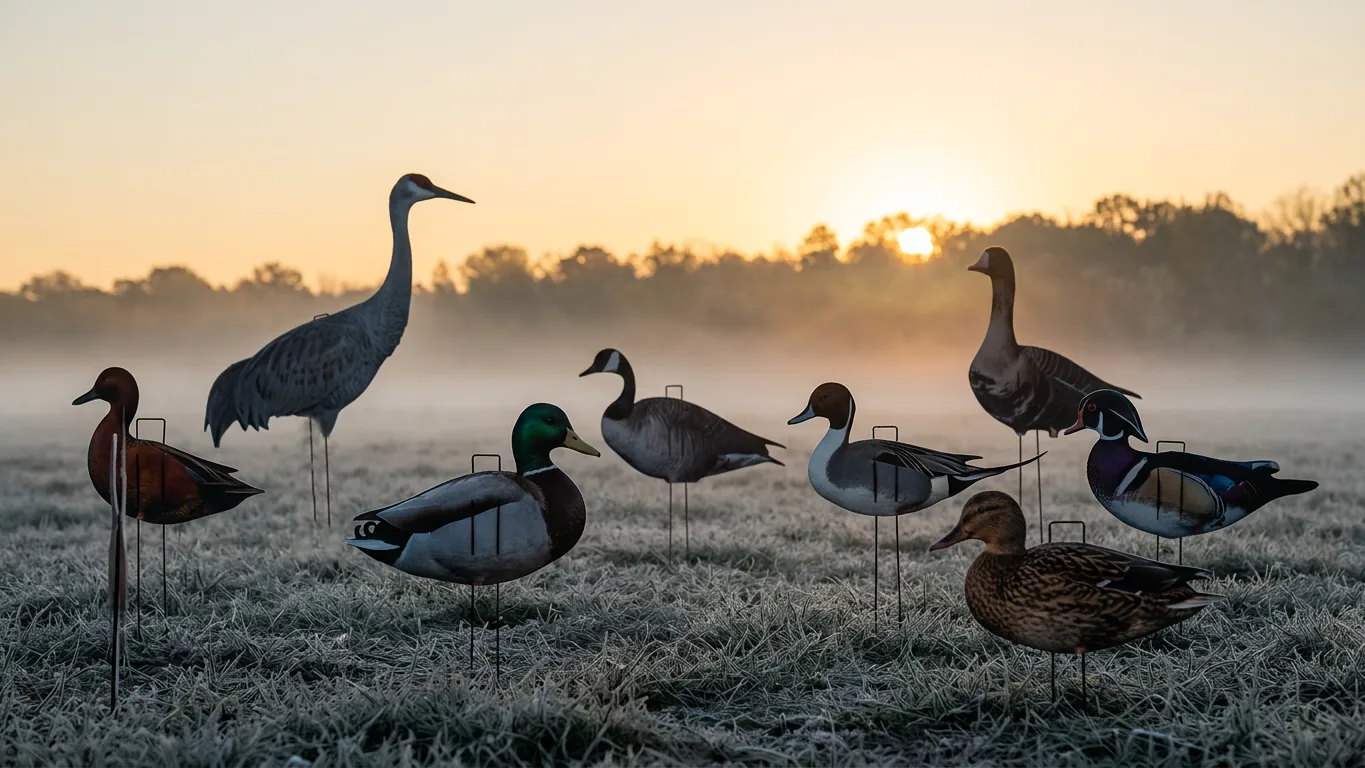
Canada geese. Twenty-four is about the floor, and I really like four to six dozen. If I am hunting a field that is holding a lot of geese, I will definitely put more out.
Snow geese are different. I want at least three to four dozen, but I am much more comfortable with six to ten dozen or more. Snows are flock birds, and when you are trying to pull them into a field, the spread needs some size to it.
Specklebellies do not need nearly as many. Twelve to 24 is enough to get started, and I really like 18 to 36. With specks I care more about the spread looking like a group of birds that belongs there than about putting out a massive number.
Run more decoys late in the season
Generally, I run more decoys later in the season.
Early-season birds have not seen everything yet. They are not as educated, and you can get away with a smaller, simpler spread. By late January, those birds have seen a lot: decoys, blinds, spinning wings, trucks, hunters, you name it.
So later on, I like giving them a little more confidence. I want them looking down and thinking there are a bunch of birds already using that spot, so it must be safe.
That does not mean throwing out every decoy I own. It has to fit the situation.
Public land: usually fewer, not more
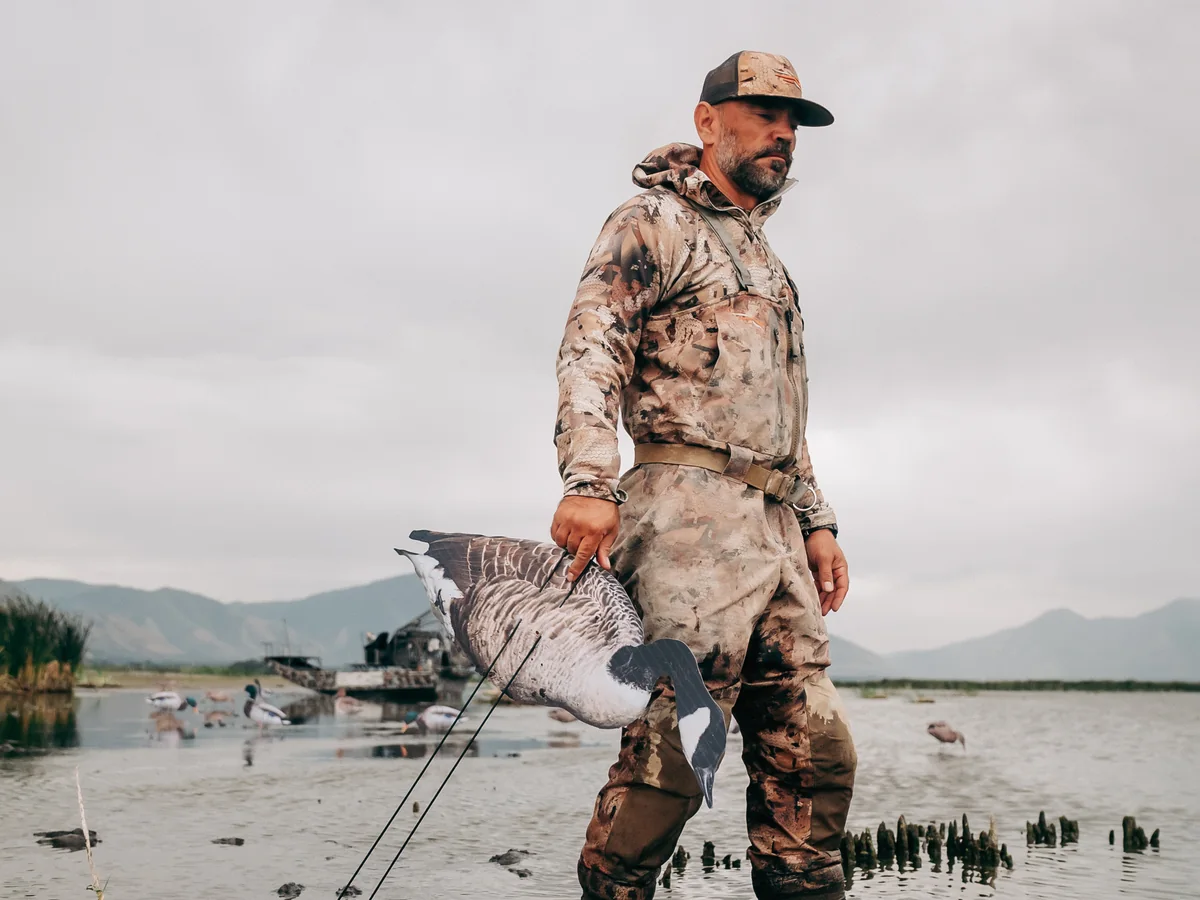
Most people assume more. I would actually say fewer on public land, most of the time.
Public land is a different game. You may have more pressure, other spreads around you, smaller areas to work with, and birds that are already getting educated. Throwing 100 decoys out does not automatically give you an advantage.
Sometimes a really clean two or three dozen spread with a good hole and good concealment will out-hunt a giant spread.
On private ground, if I know the birds are using that field and I have the room, I am much more willing to build a bigger spread. But I still let the birds tell me how many I need.
When more decoys starts to hurt
There is definitely a point of diminishing returns.
The biggest thing is giving the birds somewhere to land. If I put decoys everywhere and do not leave them a clean hole, I have taken away the exact thing I am asking them to do.
Too many can also just look wrong. If I am hunting a little pothole that normally holds 20 ducks and I put 150 decoys on it, that is probably not helping me.
I would take 30 well-placed, realistic decoys over 100 decoys that are just scattered everywhere.
The real mistake is not the number
The biggest mistake is focusing on the count and not on what the spread is actually supposed to look like.
When somebody calls and asks how many decoys they need, it is a hard question to answer without knowing more. What species are you hunting? Water or field? How big is the area? How many birds are using it? What is the pressure like?
The mix, spacing and placement matter just as much as the number. I want the spread to look like birds are comfortable there: feeders, loafers and active birds, different spacing, and most importantly, a place for those birds to finish.
Where to start if you are new
Do not feel like you have to buy the biggest spread on the market right out of the gate. Figure out what you mainly hunt and build around that.
- Mostly ducks? Start with 18 to 24 good, versatile duck decoys and learn how to hunt them before buying a pile you do not know how to use.
- Getting into geese? Start around three to four dozen goose decoys and build from there.
As you hunt more, you will figure out what your birds want. Maybe more decoys, maybe fewer, maybe a different species mix.
The goal is not to have the biggest spread. The goal is to have the most convincing spread you can build for the situation you are hunting.
Common Questions
How many decoys do I need for ducks?
On water, about a dozen is the minimum for a spread that works, and 18 to 24 is more comfortable. In a field, 18 to 24 is the floor and 30 to 48 is a comfortable spread.
How many decoys do I need for Canada geese?
Around 24 is the floor, and four to six dozen is a comfortable spread. Put more out if the field is holding a lot of geese.
How many snow goose decoys do I need?
At least three to four dozen, but six to ten dozen or more is more comfortable. Snow geese are flock birds and a field spread for them needs some size.
Should I use more decoys on public land?
Usually fewer. With more pressure and educated birds, a clean two or three dozen spread with a good hole and good concealment can out-hunt a giant spread.
Can you use too many decoys?
Yes. If decoys cover the area with no clean landing hole, birds have nowhere to finish. Too many can also look unnatural on small water.